
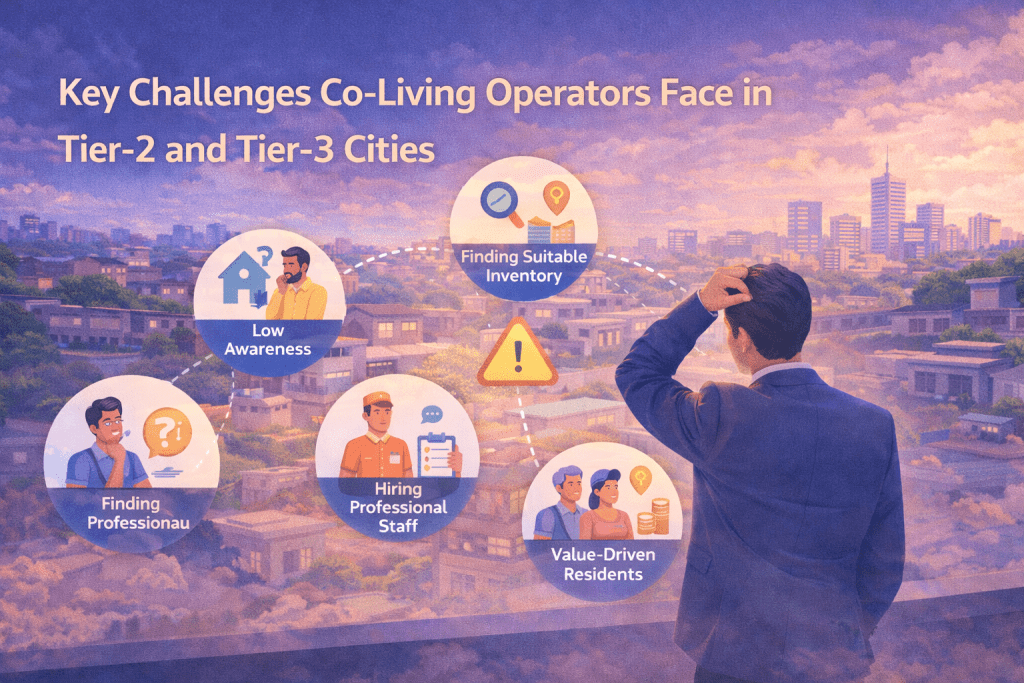
As India’s co-living sector looks beyond metros, Tier-2 and Tier-3 cities present a promising yet complex opportunity. While demand from students and young professionals is growing, operators must navigate several structural and behavioural challenges unique to these markets.
1. Low Awareness Among Property Owners
One of the first hurdles is the lack of understanding of the co-living model among local property owners. Many landlords are familiar only with traditional leasing or PG formats. Concepts such as revenue-sharing, longer lock-ins, operational control, and tech-led management often require significant education and trust-building before deals can be closed.
2. Access to Suitable and Scalable Inventory
Co-living needs larger, well-planned assets to achieve operational efficiency. In Tier-2 and Tier-3 cities, most housing stock is fragmented — individual homes or small buildings not designed for shared living. Finding bigger inventory near campuses, industrial zones, or skill hubs is time-consuming and can slow down expansion plans.
3. Availability of Professional Staff
Consistent operations depend on trained housekeeping, front-desk, and facility teams. Smaller cities often lack professionally trained hospitality staff, forcing operators to invest heavily in training, SOPs, and supervision. While this adds initial effort, it becomes critical for maintaining brand standards.
4. Changing Student and Resident Mindsets
Students and first-time migrants in non-metro cities are often used to low-cost PGs or informal rentals. Convincing them to adopt organised co-living — with rules, digital payments, and shared responsibilities — requires time, transparency, and on-ground engagement.
5. Balancing Pricing with Expectations
Tier-2 and Tier-3 residents are value-driven. Over-promising amenities or importing metro pricing models can hurt occupancy. Success lies in offering essential comforts, cleanliness, safety, and reliability at the right price point.
The Way Forward
Tier-2 and Tier-3 cities demand patience, localisation, and disciplined execution. Operators who invest early in education, systems, and community building will be best positioned to unlock long-term, sustainable growth.
Related Articles
The Blind Spot in Tier-2/3 Student Housing
Perceived Risks for Co-Living Operators Expanding into Tier-2 and Tier-3 Cities
Myths vs Facts: The Real Risks of Operating Co-Living in Tier-2 & Tier-3 Cities in India