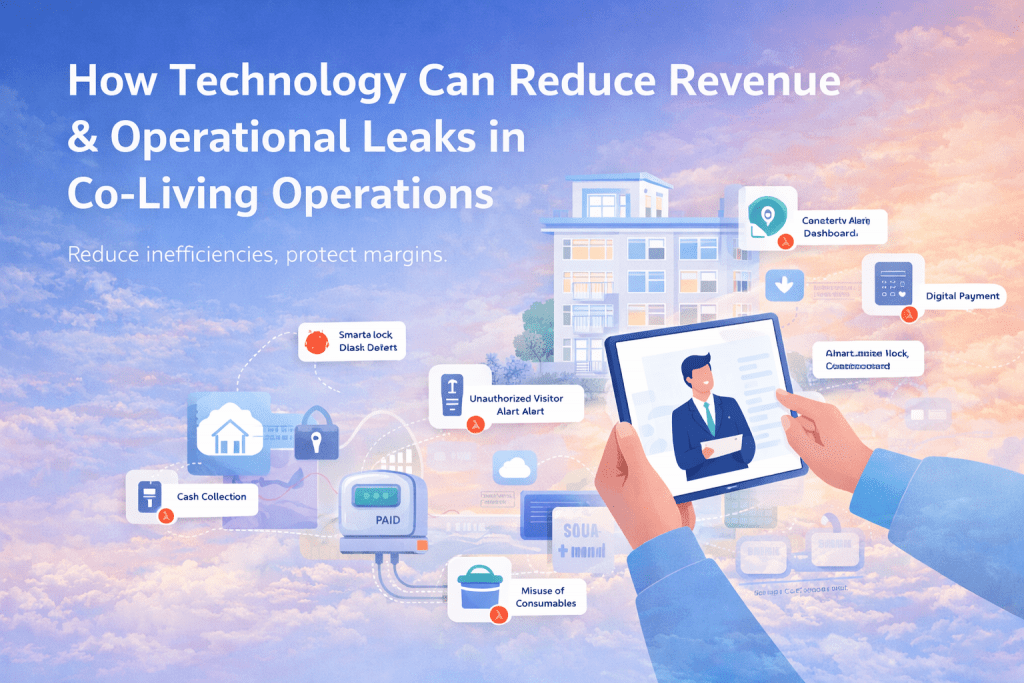
Co-living businesses don’t usually fail due to lack of demand — they struggle because of small operational leaks that quietly compound over time. From unpaid stays to utility misuse, these inefficiencies can significantly impact margins. The good news? Most of them are fixable with the right technology stack.
As we’ve scaled HooLiv, one thing has become very clear to me: most losses in co-living don’t come from big decisions — they come from small, repeated operational leaks.
Occupancy looks good on paper, pricing seems right, but margins still feel tight. When you dig deeper, the reasons are almost always operational.
At HooLiv, we’ve learned that technology is not a “nice to have” in co-living — it’s a discipline tool.
Uninformed or Unauthorized Check-ins
Uninformed or unauthorized check-ins are a silent problem. When rooms are occupied without a system check-in, billing and accountability break down. By integrating smart meters with digital check-in, electricity is activated only after a resident is properly onboarded. No check-in, no power — the system enforces what people shouldn’t have to.
Cash Collection & Revenue Leakage
Cash collection is another major leak. Cash creates ambiguity, delays, and trust issues. Moving to *100% digital payments through a tenant app* brings transparency, real-time visibility, and cleaner reconciliation.
Unauthorized Visitors
Visitor misuse is equally common. Friends staying over “for a few days” quietly turn into unpaid occupancy. Smart locks integrated with access rules ensure that only approved, paid stays are allowed — without awkward conversations on ground.
Misuse of Consumables
Then there’s consumables. Linen, toiletries, cleaning supplies — small items, big leakage. By connecting inventory management with our CRM, we track usage patterns and bring accountability into everyday operations.
Utility Overuse
IoT-enabled monitoring for electricity and water helps identify abnormal usage, leakages, or faulty equipment — allowing proactive intervention rather than inflated bills at month-end.We’ve also seen value in tech-led housekeeping workflows, maintenance ticketing, energy and water monitoring, and digital move-out processes. Each one closes a small gap.
Data-Driven Audits
Finally, centralized dashboards that combine occupancy, payments, access logs, and utilities allow operators to spot anomalies in real time, not after losses occur.
Together, they protect margins.
THE BIGGEST LESSON? SCALE WITHOUT SYSTEMS IS CHAOS.
Technology doesn’t replace people — it protects teams, enforces fairness, and allows us to focus on what really matters: building a reliable, well-managed living experience.
This is how we think about operations at HooLiv — quietly, structurally, and with intent.
In co-living, profitability isn’t just about higher rents — it’s about running tighter operations. Technology doesn’t just scale growth; it protects margins.